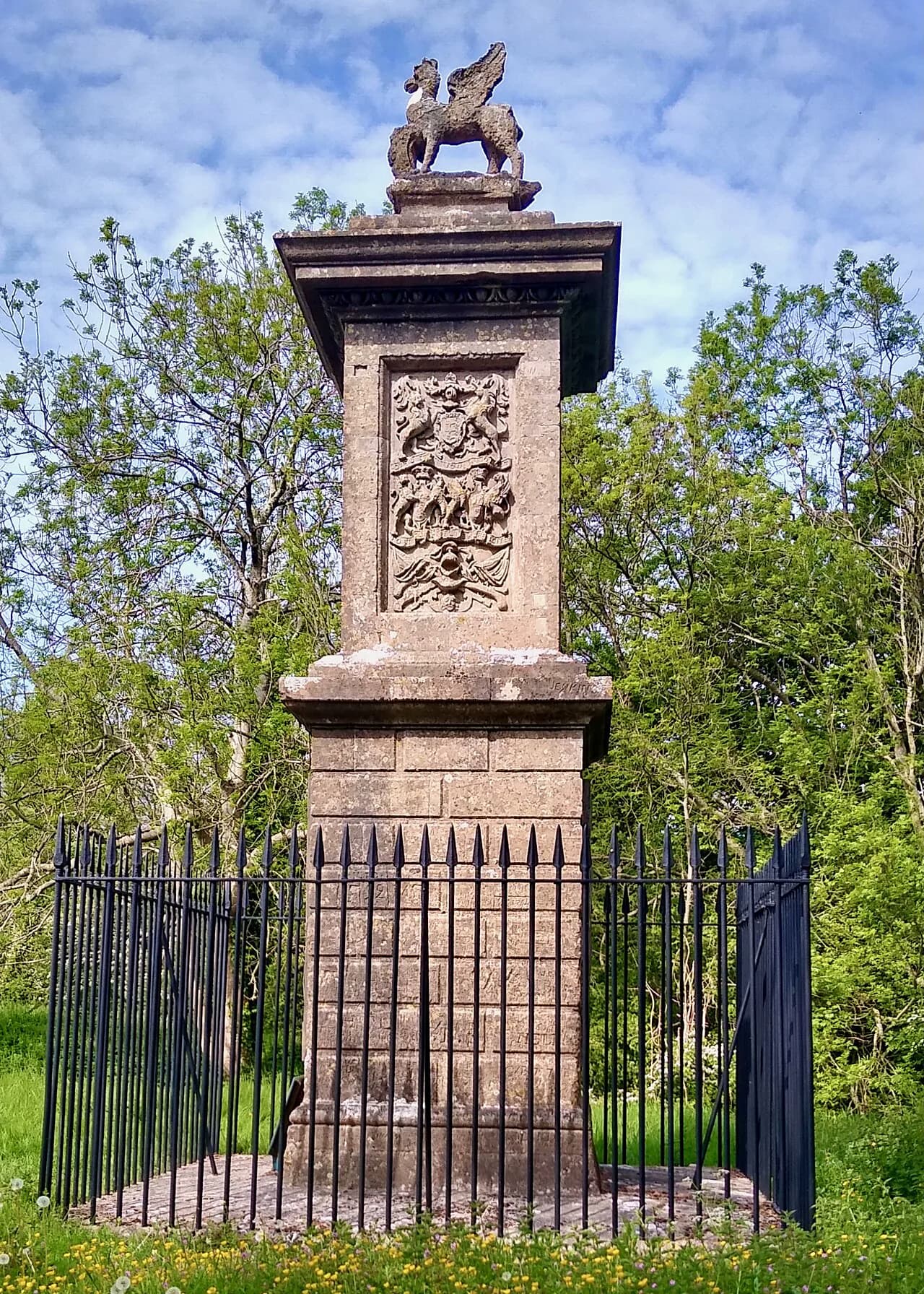
Sir Bevil Grenville's Monument stands on Lansdown Hill about four miles north-west of Bath, on the Civil War battlefield of Lansdown. On 5 July 1643, during the English Civil War, Royalist forces under Sir Ralph Hopton attacked Parliamentarians commanded by Sir William Waller, who held the high ground. Sir Bevil Grenville (1596-1643) of Cornwall led his Cornish pikemen in the assault on Waller's position and was mortally wounded in the fighting; he was carried to the rectory at Cold Ashton, where he died.
The ashlar monument was erected in 1720 by Grenville's grandson, George Granville, 1st Baron Lansdowne. About 25 feet (7.6 m) high and English Baroque in style, it carries a quotation from Lord Clarendon's account of the battle, poems on the north face, and a griffin holding the Grenville arms at the top. It is both a Grade II* listed building (listed 1956) and a scheduled monument (scheduled 1950). English Heritage cares for the site, which remains free to visit in daylight hours.
The Cotswold Way crosses this Lansdown plateau on Stage 15 (Cold Ashton to Bath), so the monument sits right beside the National Trail on the final approach into the city - a natural pause with battlefield context before the path continues past Bath Racecourse toward Prospect Stile and the Abbey finish. There is a layby beside the site; dogs on leads are welcome. Practical notes are on the English Heritage page for Sir Bevil Grenville's Monument.